A Designer’s Practical Review of Baby Jesus in a Manger Glowing Redwork
When a new embroidery file lands in my library, especially one with a clear thematic purpose like this, my first instinct isn't just to admire it—it’s to visualize it stitched out. I imagine it on fabric, in a hoop, and finally, as part of a finished product someone will hold, wear, or give. Let’s walk through that process with Baby Jesus in a Manger Glowing Redwork, examining it from the perspective of someone who needs to use it for real client projects, handmade items, or small shop merchandise.
The Immediate Mood and Visual Personality
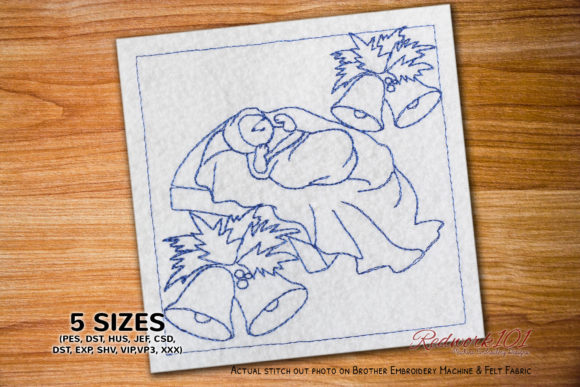
The design immediately communicates a quiet, focused reverence. The "Glowing Redwork" style suggests a reliance on clean, continuous lines rather than dense fills, which creates a gentle, almost illustrative feel. It’s a classic religious faith image rendered with an embroidery-friendly approach. This isn't a loud, ornate piece; its power lies in its simplicity and recognizable iconography. For a crafter or small business owner, that means it carries emotional weight without being overly complex to stitch, making it suitable for a wide audience—from devout customers to those simply seeking a tasteful holiday motif.
Where This Design Finds Its Natural Home
In my mind, I’m already picturing specific applications. A custom tote bag for a church group’s fundraiser. A simple, elegant patch stitched onto a denim jacket as a personal statement. A delicate corner embellishment on a Christmas stocking or a pillow cover for a nursery. Because it’s likely a lighter stitch density design, it would be beautiful on baby items like a blanket or a bib, where heavy embroidery can be impractical.
For Etsy sellers or creative entrepreneurs, this design translates well into printable mockups for digital product listings and fits neatly into categories like holiday gifts, personalized faith-based items, and boutique home decor. The optional box stitch mentioned is a practical consideration—it frames the central image, but knowing you can skip it or adjust its color offers flexibility. That’s crucial when adapting a design for different products: a stark black box might work on a kitchen towel, but a softer, matching thread color might be better for a baby’s sweater.
A Real Scenario: Preparing a Holiday Gift Sweatshirt
Let’s say a client requests this design on a cream-colored sweatshirt as a Christmas gift. My practical evaluation starts here. The redwork style, presumably using a single or limited thread color palette, would contrast beautifully against the cream fabric. The linear nature of the design means stitch density should be manageable, reducing the risk of puckering on the sweater’s textured fabric. I’d note, however, to use a sturdy stabilizer due to the knit’s stretch. The design’s clarity and clean lines would result in a professional, handmade presentation that feels intentional and valuable—key for building customer trust and repeat business.
Careful Application: Where to Proceed with Caution
Even with a lovely design, thoughtful application is everything. For Baby Jesus in a Manger Glowing Redwork, I’d advise some caution on a few fronts. On very dark fabrics, the "glowing" effect might be lost unless you opt for a bright, contrasting thread, so a test on scrap fabric is essential. Small hoop sizes could compress the details; ensure the design scale allows for the manger details and optional box to remain clear.
- Stretchy fabrics like t-shirts require excellent stabilization to keep those clean lines from distorting.
- Curved surfaces like caps need careful placement to ensure the rectangular manger sits well without awkward gaps.
- If used for products needing frequent washing, like aprons or tea towels, confirm the stitch structure is dense enough to withstand wear—running stitch borders might be more vulnerable than satin stitches.
The takeaway? This isn’t a design you slap on any blank without thought. Its success depends on matching its aesthetic strengths with the right product base.
Impact on Business and Buyer Engagement
From a commercial embroidery perspective, this design adds value. Its clear theme taps into a specific market (religion faith, holiday, gift-giving), making it easy for customers to recognize and connect with. For a craft business owner, offering a finished product with this design—say, an embroidered pillow cover—signals a niche expertise. It feels professional and purposeful, not generic.
The handmade presentation is elevated because the design itself is elegant and uncluttered. It speaks to quality. For giftability, it’s a strong contender: it’s personal, symbolic, and beautifully executable. In an Etsy listing or at a craft fair, a well-stitched sample using this design would attract engagement because it tells a story instantly.
Essential Designer Notes Before You Stitch
Before committing this to a client’s project or your own inventory, do your homework. Since specific details like exact stitch count or file formats aren’t provided here, you must acquire them.
- Always stitch a test sample on a comparable scrap fabric. Check thread color contrast—does "glowing" require a specific red or can it be adapted?
- Review the stitch density in the file preview. Are the fills light enough for delicate fabrics?
- Confirm the hoop size required. Does it need a large field for the optional box, or can it be minimized?
- Inspect the small details, like the baby’s features and manger lines, to ensure they’ll stitch out cleanly.
- Create black and white mockups to see how it reads without color, and compare it on light and dark background simulations.
- Use the proper stabilizer for your chosen fabric. This is non-negotiable for professional results.
- Critically, check the licensing terms. Can you use this for commercial embroidery projects, selling finished products, or as part of your digital product offerings? Never assume.
Final Practical Judgment
Baby Jesus in a Manger Glowing Redwork is, from a designer’s seat, a thoughtfully composed embroidery design with strong practical potential. It creates a specific mood and fits naturally into product categories where emotion and simplicity are valued. Its success in real-world use—on apparel, decor, or gifts—will hinge on the careful pairing of fabric, technique, and intent. It’s a design that rewards a mindful approach, and when executed well, it can become a staple in the portfolio of any crafter, decorator, or small business owner looking to offer meaningful, beautifully made items.